How to do the Bodyweight Squat
- Stand with feet about shoulder width, arms straight out in front.
- Bend your hips and knees together until your hips drop just below the top of your knees.
- Keep your heels down and knees pointing where your feet point.
- Push through your feet to stand back up fully.
Full technique — 7 steps
- Stand with feet between hip and shoulder width and raise both arms straight in front at shoulder height.
- Tighten your stomach and keep your torso tall.
- Bend your hips and knees together, pushing your hips back and down.
- Keep your whole foot grounded and let your knees point the same way as your feet.
- Lower until your hips drop just below the top of your knees, letting your arms angle down slightly for balance.
- Drive through your whole foot to stand up, extending knees and hips together.
- Finish tall with knees and hips fully straight before starting the next rep.
Common mistakes
- Knees collapsing inward
- Cutting the squat high
- Heels lifting at the bottom
- Hips shooting up first
- Bouncing out of the bottom
Form cues
- Drive through whole foot
- Knees point where feet point
- Keep whole foot planted
- Arms forward for balance
- Control the bottom
Compared with similar variants
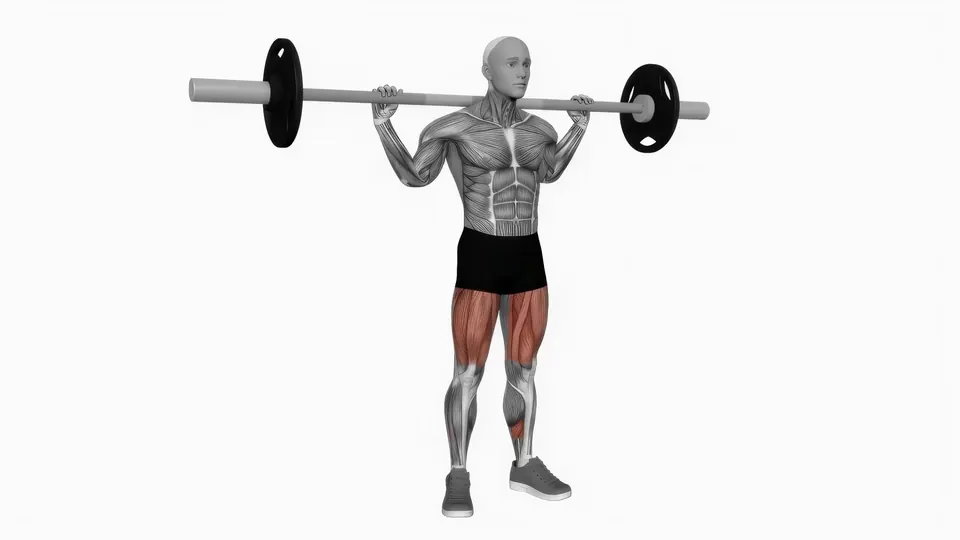
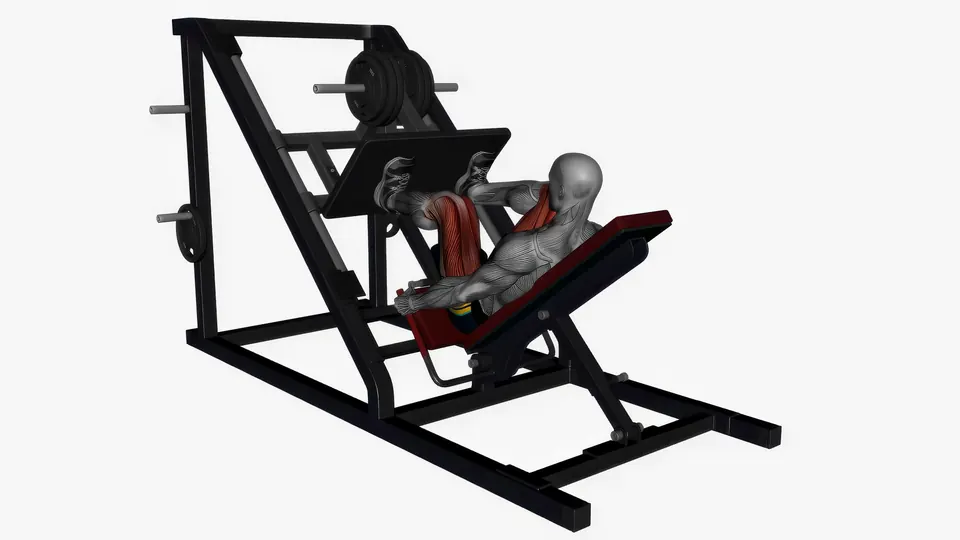
| Bodyweight Squat | Barbell Back Squat | Hack Squat (Machine) | Low Bar Back Squat | |
|---|---|---|---|---|
| Level | Beginner | Intermediate | Intermediate | Advanced |
| Technique to learn | easy | hard | easy | hard |
| How tiring | low | high | moderate | high |
| Knee | low | high | high | moderate |
| Hip | low | moderate | low | high |
| Equipment | No equipment | Barbell, Squat rack | Hack squat machine | Barbell, Squat rack |
An estimate from our exercise ratings, not medical advice. How we rate exercises
Substitutes by equipment
Same muscles, same movement — pick the version you have the gear for.
Barbell
- Barbell Front Box Squat Harder
- Barbell Overhead Squat Harder
Kettlebell
- Kettlebell Squat Harder
- Kettlebell Deficit Sumo Squat Harder
Machine
- Horizontal Leg Press Easier
- Single Leg Resistance Band Leg Press Same level
Dumbbells
- Wide Stance Dumbbell Squat Harder
- Dumbbell Box Squat Same level
Where to start and where to go next
Same muscles, same movement. Too hard for now — step down; once it gets easy — step up.
- Easier Balance Board Weight Shift
- Easier Stability Ball Wall Squat
- This exercise Bodyweight Squat
- Harder Assisted Pistol Squat
- Harder Skater Squat
Too hard for now? Start with the Stability Ball Wall Squat.
In ready-made workouts
- 20-minute bodyweight workout20 min · No equipment
- Bodyweight leg workout30 min · No equipment
Quick answers
What muscles does the Bodyweight Squat work?
Primary: Quads 9/10, Glutes 8/10. Also works: Hip adductors 5/10, Hamstrings 4/10, Calves 3/10.
Which joints does the Bodyweight Squat load?
Knee: low, Hip: low, Ankle: low.
When should I do the Bodyweight Squat in a workout?
Accessory. Goes after the main lifts. ≈ 6 min with rest.
How many sets and reps of the Bodyweight Squat?
Strength: 3–4 sets of 10–15 reps, rest 1 min 15 s, 3 reps in reserve. Muscle growth: 3–4 sets of 15–25 reps, rest 1 min, 2–3 reps in reserve. Endurance: 2–3 sets of 20–30 reps, rest 45 s, 3–4 reps in reserve.
What can I do instead of the Bodyweight Squat?
Barbell: Barbell Front Box Squat, Barbell Overhead Squat. Kettlebell: Kettlebell Squat, Kettlebell Deficit Sumo Squat. Machine: Horizontal Leg Press, Single Leg Resistance Band Leg Press. Dumbbells: Wide Stance Dumbbell Squat, Dumbbell Box Squat.
What is an easier version of the Bodyweight Squat?
Stability Ball Wall Squat (25% of bodyweight), Balance Board Weight Shift (15% of bodyweight).
What is a harder version of the Bodyweight Squat?
Assisted Pistol Squat (50% of bodyweight), Skater Squat (80% of bodyweight).