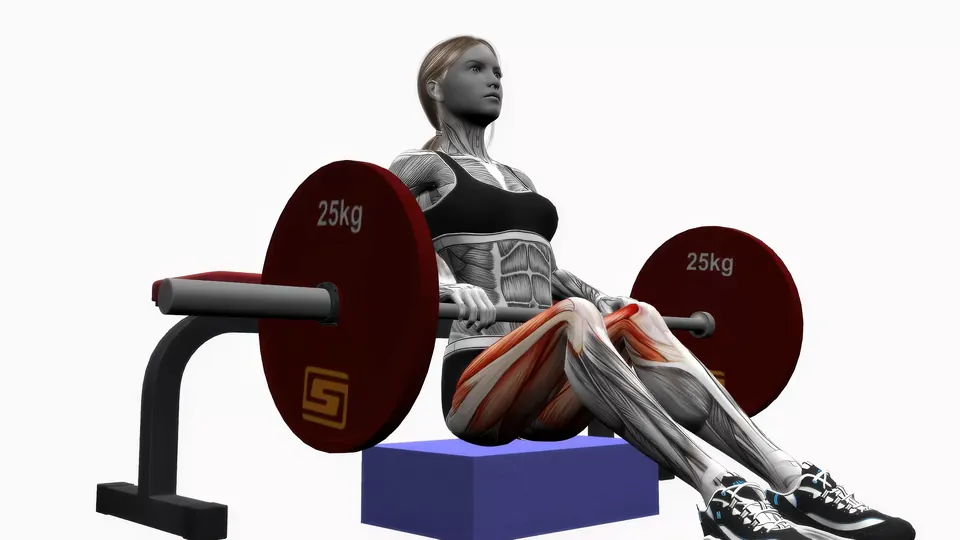
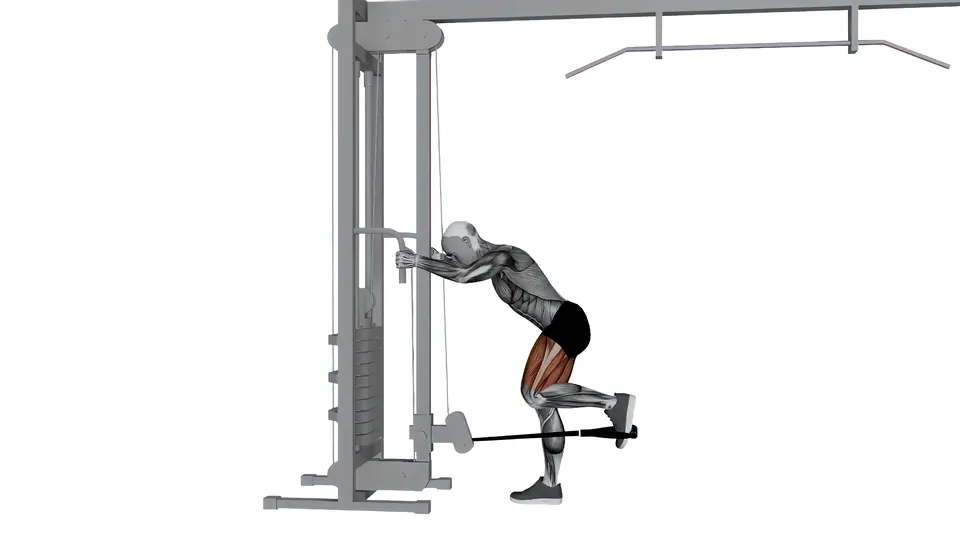
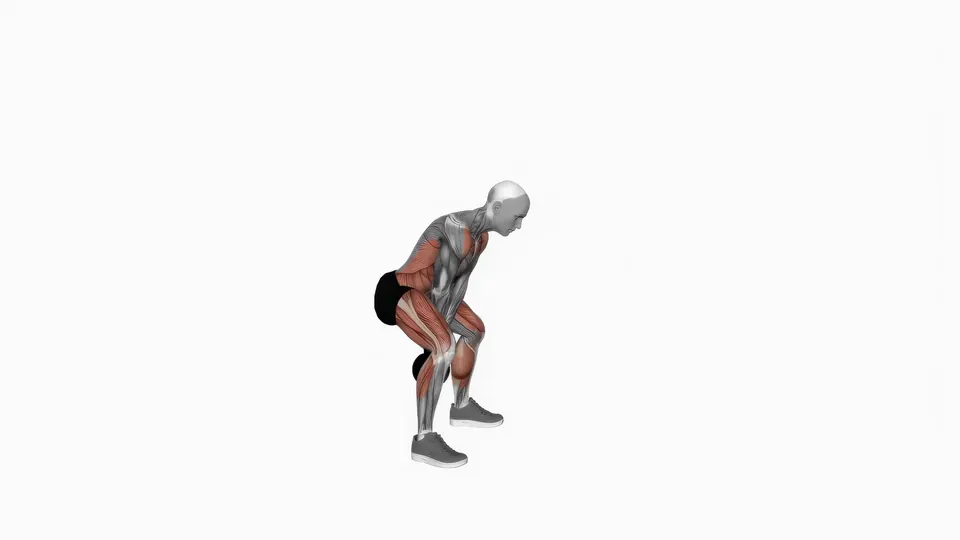
How to do the Reverse Hyperextension with Stability Ball and Mini Band
- Loop a mini band above your knees and lie face down on the bench.
- Hold the bench and squeeze a ball between your feet, legs hanging low.
- Lift your legs up behind you until they reach torso level.
- Lower your legs slowly, keeping the ball between your feet.
- Avoid arching your back as you lift your legs.
Full technique — 8 steps
- Loop a mini band around your thighs just above the knees.
- Lie face down on a flat bench with your hips at the end of the bench.
- Hold the far end of the bench with both hands to keep your torso in place.
- Squeeze a stability ball between your feet and let your legs hang low with knees nearly straight.
- Tighten your stomach and keep your torso still with your neck neutral.
- Raise your legs behind you by driving hip extension through the glutes and hamstrings.
- Lift until your legs reach roughly torso level without kicking upward or over-arching the lower back.
- Lower your legs under control while keeping the ball between your feet.
Common mistakes
- Swinging the legs with momentum
- Hyperextending the lower back
- Bending knees excessively during reps
- Lifting legs far above torso
- Letting the ball slip from the feet
Form cues
- Move from the hips
- Stop at torso level
- Keep torso quiet
- Squeeze glutes, not back
- Push knees into band
Substitutes by equipment
Same muscles, same movement — pick the version you have the gear for.
Machine
- Machine Glute Kickback Easier
No equipment
- Plank Leg Raise Easier
- Fire Hydrant Circles Easier
Where to start and where to go next
Same muscles, same movement. Too hard for now — step down; once it gets easy — step up.
- Easier Anchored Resistance Band Glute Kickback
- Easier Donkey Kick to Fire Hydrant
- This exercise Reverse Hyperextension with Stability Ball and Mini Band
- Harder Landmine Donkey Kick
Too hard for now? Start with the Donkey Kick to Fire Hydrant.
Quick answers
What muscles does the Reverse Hyperextension with Stability Ball and Mini Band work?
Primary: Glutes 9/10. Also works: Hamstrings 6/10, Hip abductors 4/10, Hip adductors 4/10.
When should I do the Reverse Hyperextension with Stability Ball and Mini Band in a workout?
Finisher. Goes last, once the heavy work is done. ≈ 6 min with rest.
How many sets and reps of the Reverse Hyperextension with Stability Ball and Mini Band?
Strength: 3–4 sets of 10–12 reps, rest 1 min 15 s, 2–3 reps in reserve. Muscle growth: 3–4 sets of 12–20 reps, rest 1 min, 2–3 reps in reserve. Endurance: 2–3 sets of 20–25 reps, rest 45 s, 3–4 reps in reserve.
What can I do instead of the Reverse Hyperextension with Stability Ball and Mini Band?
Machine: Machine Glute Kickback. No equipment: Plank Leg Raise, Fire Hydrant Circles.
What is an easier version of the Reverse Hyperextension with Stability Ball and Mini Band?
Donkey Kick to Fire Hydrant (10% of bodyweight), Anchored Resistance Band Glute Kickback (Beginner).
What is a harder version of the Reverse Hyperextension with Stability Ball and Mini Band?
Landmine Donkey Kick (Intermediate).