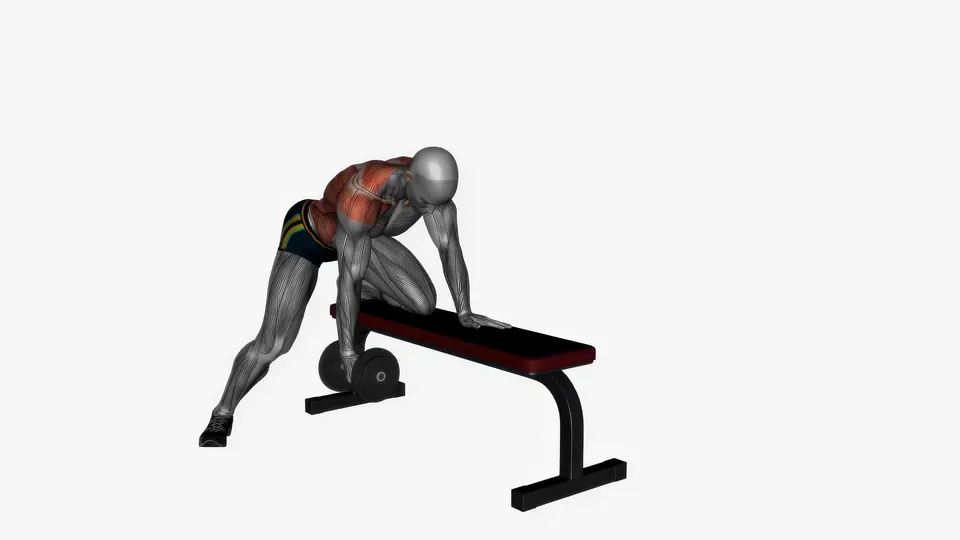
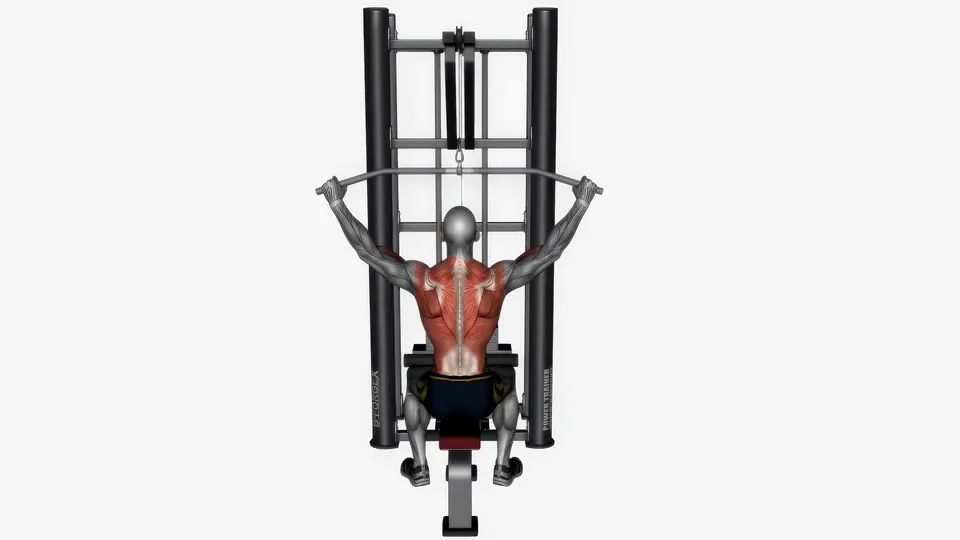
How to do the Bench Assisted Chin-Up
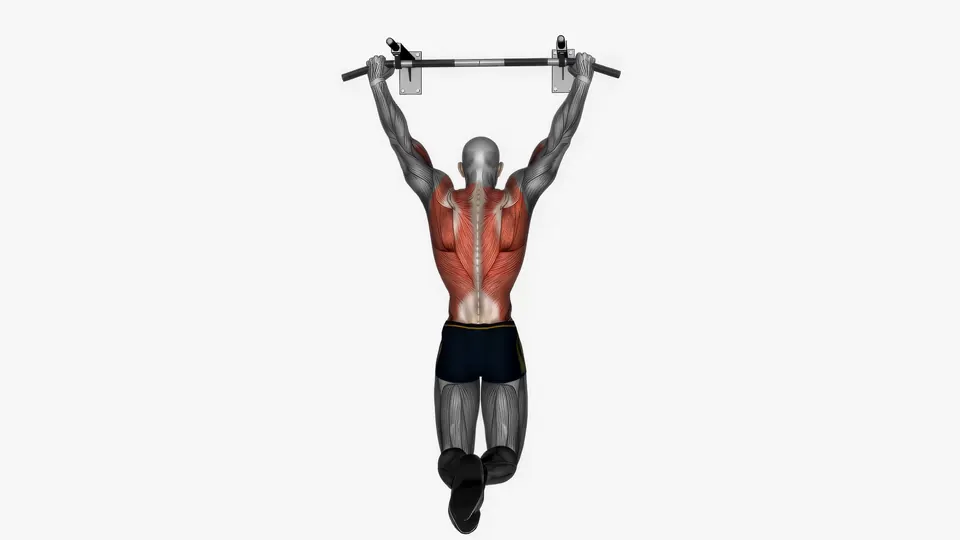
- Grip the bar with palms facing you, hands a little narrower than your shoulders.
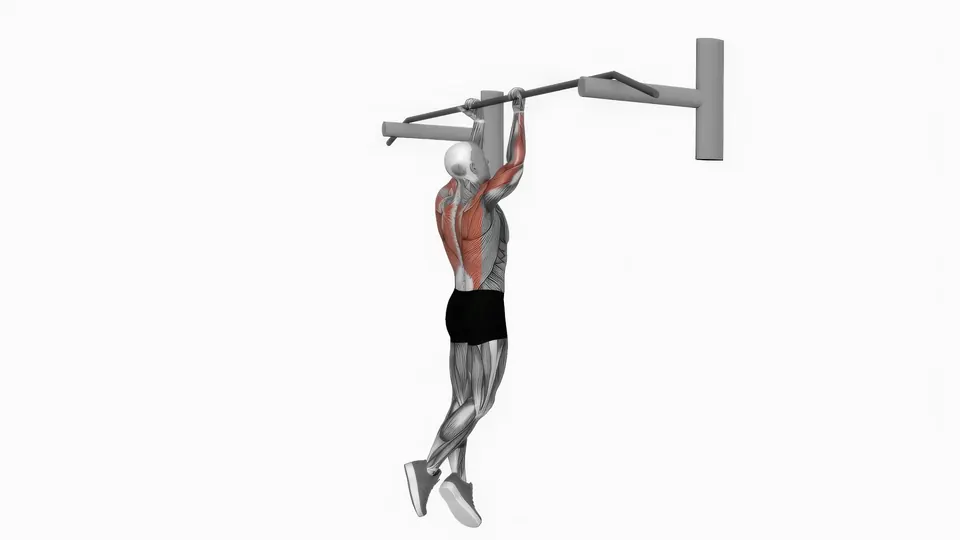
- Hang with straight arms, one foot resting on the bench.
- Pull yourself up until your chin clears the bar, using your back and arms.
- Use the foot only for as much help as you need.
- Slowly lower yourself back down to the starting position, arms fully extended.
Full technique — 7 steps
- Place a flat bench under the pull-up bar and stand on it.
- Grip the bar with an underhand grip slightly narrower than shoulder width.
- Hang with arms straight, one foot resting on the bench and the other leg hanging free.
- Start the pull by driving your elbows toward your ribs.
- Push through the foot on the bench only as much as you need to keep moving.
- Continue until your chin clearly passes the bar.
- Lower yourself under control until your arms are straight and your foot is back on the bench.
Common mistakes
- Pushing mostly with the leg
- Stopping short of full hang
- Craning neck over bar
- Half reps at the top
- Shrugging shoulders toward ears
Form cues
- Drive elbows to ribs
- Chest toward the bar
- Use leg only as needed
- Let arms fully hang
Compared with similar variants
| Bench Assisted Chin-Up | Pull-Up | Chin-Up | Assisted Pull-Up | |
|---|---|---|---|---|
| Level | Beginner | Intermediate | Intermediate | Beginner |
| Technique to learn | easy | moderate | moderate | easy |
| How tiring | moderate | moderate | moderate | moderate |
| Shoulder | moderate | moderate | moderate | low |
| Elbow | moderate | moderate | moderate | low |
| Equipment | Pull-up bar, Flat bench | Pull-up bar | Pull-up bar | Assisted pull-up machine |
An estimate from our exercise ratings, not medical advice. How we rate exercises
Substitutes by equipment
Same muscles, same movement — pick the version you have the gear for.
Suspension trainer
- Suspension Trainer Chin-Up Harder
Machine
Cable machine
- Dual Cable Lat Pulldown Same level
- Single Arm Half Kneeling Cable Lat Pulldown Easier
Resistance bands
- Band Assisted Chin-Up Same level
- Prone Resistance Band Superman Lat Pulldown Harder
Where to start and where to go next
Same muscles, same movement. Too hard for now — step down; once it gets easy — step up.
- Easier Machine High Row
- Easier Assisted Chin-Up
- This exercise Bench Assisted Chin-Up
- Harder Bench Assisted Pull-Up
- Harder Commando Pull-Up
Too hard for now? Start with the Assisted Chin-Up.
Quick answers
What muscles does the Bench Assisted Chin-Up work?
Primary: Lats 9/10, Biceps 8/10. Also works: Teres major 6/10, Rhomboids 5/10, Rear delts 4/10, Forearms 5/10.
Which joints does the Bench Assisted Chin-Up load?
Shoulder: moderate, Elbow: moderate, Wrist: low. Shoulder — lighter options: Assisted Pull-Up, Assisted Chin-Up, Band Assisted Chin-Up.
When should I do the Bench Assisted Chin-Up in a workout?
Second big lift. Goes after the main lift, while there is still energy for heavy work. ≈ 9 min with rest.
How many sets and reps of the Bench Assisted Chin-Up?
Strength: 3–4 sets of 5–8 reps, rest 2 min, 2 reps in reserve. Muscle growth: 3–4 sets of 8–12 reps, rest 1 min 30 s, 2–3 reps in reserve. Endurance: 2–3 sets of 12–20 reps, rest 1 min, 3–4 reps in reserve.
What can I do instead of the Bench Assisted Chin-Up?
Suspension trainer: Suspension Trainer Chin-Up. Machine: Lat Pulldown (Close Overhand Grip), Single Arm Machine High Row. Cable machine: Dual Cable Lat Pulldown, Single Arm Half Kneeling Cable Lat Pulldown. Resistance bands: Band Assisted Chin-Up, Prone Resistance Band Superman Lat Pulldown.
What is an easier version of the Bench Assisted Chin-Up?
Assisted Chin-Up (Beginner), Machine High Row (Beginner).
What is a harder version of the Bench Assisted Chin-Up?
Bench Assisted Pull-Up (40% of bodyweight), Commando Pull-Up (105% of bodyweight).